
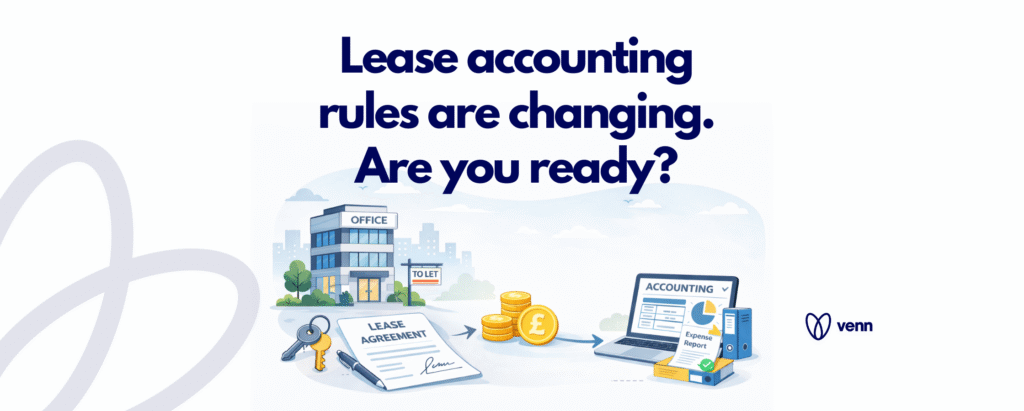
From 2026, lease accounting under FRS 102 is undergoing one of the most significant changes in recent years.
For many businesses, particularly those with property leases, vehicles or equipment financing arrangements, this will have a material impact on reported assets, liabilities and performance metrics.
If your business rents rather than owns, this matters.
What Is Changing?
Historically under FRS 102, leases were classified as either:
- Operating leases, which were off balance sheet with rent charged to profit and loss
- Finance leases, which were recognised on the balance sheet
From accounting periods beginning on or after 1 January 2026, that distinction largely disappears for lessees.
Most leases will now be brought onto the balance sheet.
This means businesses will recognise:
- A right of use asset, representing the right to use the leased asset
- A lease liability, representing the obligation to make future lease payments
In simple terms, leases will start to look more like debt.
When Do the New Rules Apply?
The new requirements apply to accounting periods beginning on or after 1 January 2026.
That means:
- A company with a 31 December 2026 year end will apply the new rules in those accounts
- A company with a 31 January 2026 year end will not apply them yet
- A company with a 31 January 2027 year end will
It is the start of the accounting period that determines application, not the year end.
Early adoption is possible, but most businesses will wait until mandatory implementation.
What Does This Do to Your Financial Statements?
-
The Balance Sheet Grows
Businesses with material lease commitments will see:
- An increase in total assets
- An increase in total liabilities
- Potential changes to gearing and leverage ratios
For property heavy businesses, this can be significant.
-
Profit and Loss Changes
Instead of recording rent evenly as an operating expense, you will now record:
- Depreciation on the right of use asset
- Interest expense on the lease liability
This changes performance metrics:
- EBITDA increases because rent is removed
- Operating profit may improve
- Finance costs increase
- Profit timing may shift due to a front loaded interest profile
-
Banking Covenants May Be Affected
This is often the biggest practical issue.
Bringing leases onto the balance sheet can affect:
- Debt to equity ratios
- Interest cover
- Leverage metrics
- EBITDA based covenants
Businesses with borrowing facilities should assess the impact well in advance and, where necessary, speak to lenders early.
Determining the Lease Term. The Critical Judgement
One of the most important aspects of the new rules is how you determine the lease term.
The lease term includes:
- The non cancellable period
- Any extension periods you are reasonably certain to take
- Any break periods you are reasonably certain not to exercise
The phrase reasonably certain is key.
This requires management judgement and documentation. It is not enough to say you might break. You must assess commercial incentives such as:
- Favourable rent compared to market rates
- Significant leasehold improvements
- Relocation costs
- Strategic importance of the premises
- Availability of alternatives
For many businesses, break options will not shorten the accounting lease term if it is commercially unrealistic to exercise them.
Are There Any Exemptions?
Yes, but they are limited.
Two types of leases can remain off balance sheet:
- Short term leases of 12 months or less at commencement, with no purchase option
- Low value asset leases for genuinely small items such as laptops or small office equipment
Commercial property leases will not qualify.
What About Transition?
When applying the new rules for the first time:
- Comparative figures are not restated
- The lease liability is calculated based on the present value of remaining lease payments
- A corresponding right of use asset is recognised
- Any difference adjusts opening reserves
A suitable discount rate must be applied, typically the company’s incremental borrowing rate.
For businesses with multiple leases, modelling may be required.
Practical Considerations for Growing Businesses
For scaling or VC backed companies, particularly in tech and e commerce, this change can affect:
- EBITDA reporting to investors
- Debt negotiations
- Valuation discussions
- KPI dashboards
While EBITDA may improve, headline leverage may increase.
Understanding the narrative behind the numbers will be important.
What Should You Do Now?
Even though implementation may feel some way off, now is the right time to:
- Identify all lease arrangements
- Review break and extension clauses
- Model the balance sheet impact
- Assess covenant sensitivity
- Consider internal systems capability
For businesses with material property leases, the impact can be substantial.
Final Thought
This change moves lease accounting from a relatively simple rent expense model to one that requires judgement, modelling and clear documentation.
It will not just affect compliance. It may affect how your business is perceived financially.
If you would like help assessing the impact on your financial statements or covenants, we are happy to run a preliminary lease impact review.